
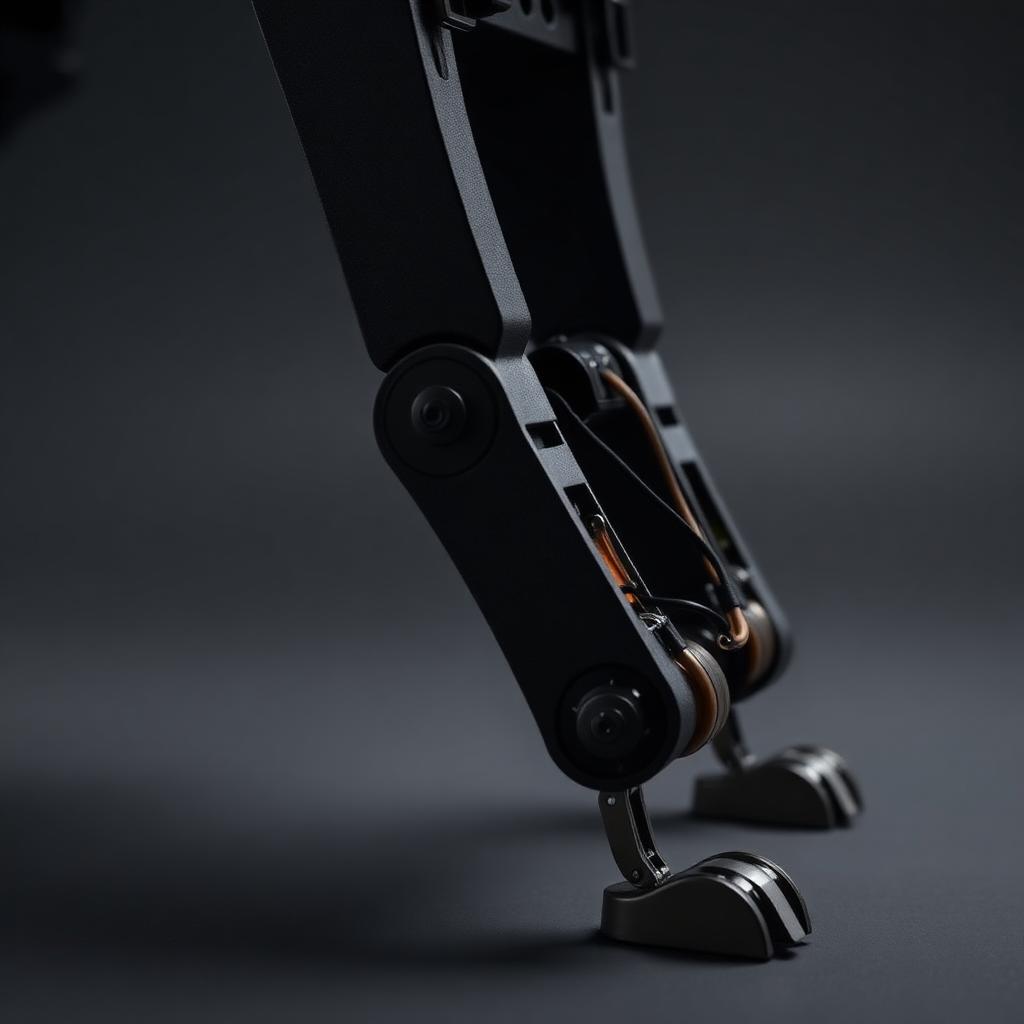
The Dog
A 12-DoF quadruped, ~15kg, capable of trotting, recovering from a kick, and following you around the lab. Runs a policy trained in simulation and fine-tuned on-device.
- Weight
- ~15 kg
- Top speed
- 3.2 m/s
- Actuators
- 12× BLDC
- Brain
- Jetson Orin
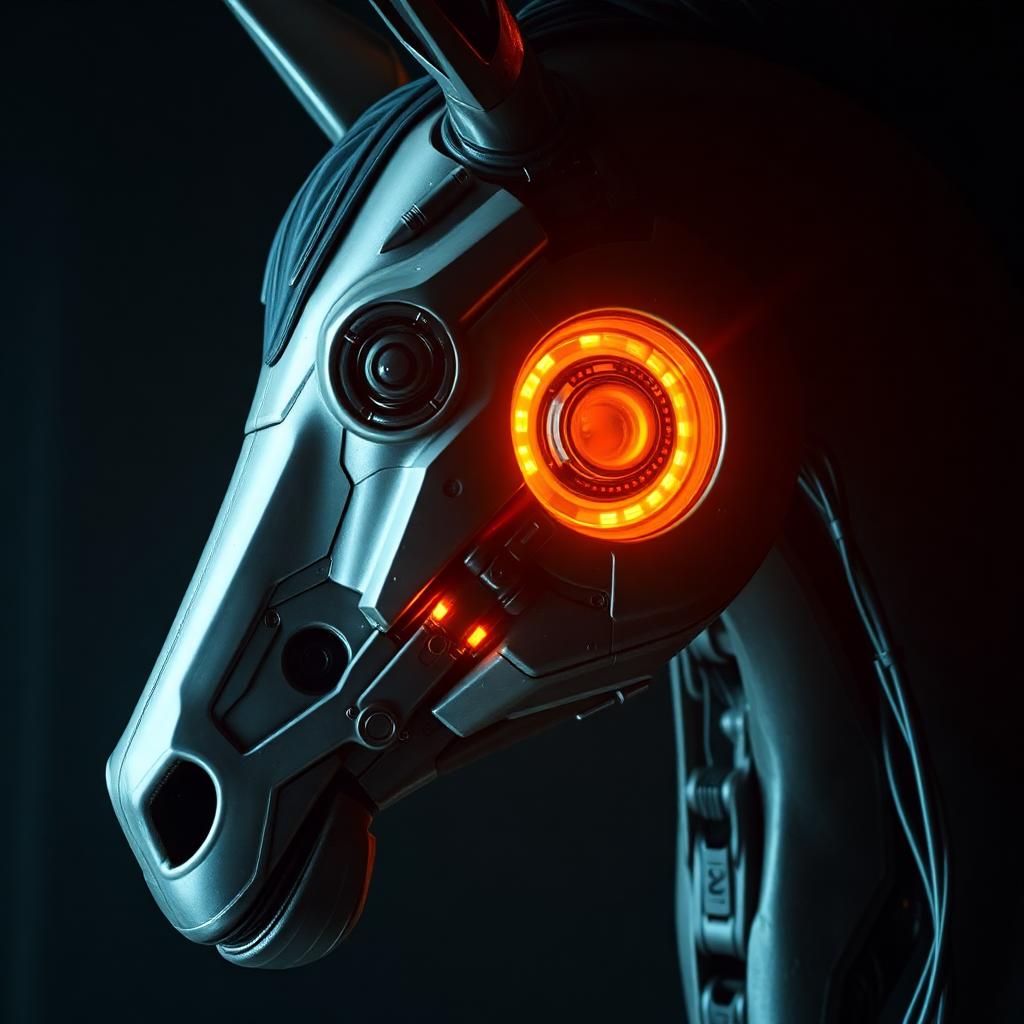
Robotics + AI is the trillion-dollar frontier. In 12 weeks, you'll go from zero to shipping two working quadruped robots — and gain the exact skillset companies are paying $180K–$320K to hire.

// Curriculum
Each module blends theory, simulation, and hands-on lab work. You leave with two robots and the intuition to build a third.
Actuators, sensors, degrees of freedom, and the control loop. Speak the language before you touch a screwdriver.
Why four legs are hard. Kinematics, gait cycles, and the biomechanics that separate a horse's gallop from a dog's trot.
From classical control to modern reinforcement learning. Give your beast reflexes, then teach it to think.
Assemble a 12-DoF quadruped. Wire it up, calibrate joints, and take the first wobbling steps.
Scale up. Larger payloads, higher torques, and the elegance of an equine gait — with AI-assisted balance.
Deployment in the real world. Safety envelopes, human-robot interaction, and the questions worth asking.
// The Builds

A 12-DoF quadruped, ~15kg, capable of trotting, recovering from a kick, and following you around the lab. Runs a policy trained in simulation and fine-tuned on-device.

A rideable equine platform. Larger frame, higher-torque actuators, and a balance policy that compensates in real time for a shifting rider load.
// Instructor
The course is led by a small team of roboticists and ML engineers who have shipped quadruped platforms at research labs, indie startups, and university programs.
Every lecture is grounded in a working codebase. Every claim is testable in simulation. You never watch a slide deck without a repository behind it.
You'll get direct feedback on your build in weekly office hours, and lifetime access to the alumni Discord — where cohort 01 is currently teaching their horses to jump.
// Why this course
Free tutorials teach you syntax. Universities teach you theory. We teach you the one thing that actually matters: how to ship a working robot.
By week 4 you have a robot dog walking on your desk. By week 12 you're training your own locomotion policy. No 300-page textbooks — just parts, code, and reps.
Quadruped engineers are the hardest hires in AI right now. Our alumni are at Boston Dynamics, Figure, 1X, Unitree, and Anduril. Portfolio pieces open doors résumés can't.
Every line of code, CAD file, and trained model is yours. Fork it, sell it, build a company on it. Two alumni have already raised seed rounds off their cohort projects.
Skip the trial-and-error tax. You'll compress a self-taught journey that took your instructors half a decade into 12 focused weeks of guided builds.
The kit ships to your door. When your servo overheats or your gait wobbles, a working engineer diagnoses it with you on Tuesday's office hours — not a forum three days later.
Classical robotics is a commodity. Robotics × AI is where the value is created. You'll train policies in sim, deploy them to real hardware, and understand exactly why they work.
// The math
Median first-year comp for our alumni landing quadruped roles is $217,000. The course pays for itself in your first week on the job.
// What builders say
"I went from writing Python glue at a fintech to leading a locomotion team at a robotics unicorn. This course was the single unlock. My cohort project is literally on the interview slides now."
"Worth every dollar and then some. The hardware kit alone is easily worth $2K, and having a working roboticist debug your servo issues on a live call is the kind of feedback loop you can't buy anywhere else."
"I'm a hobbyist, not an engineer. I was terrified I'd be over my head. By week 6 my dog was chasing my kids around the living room. My daughter now wants to be a roboticist. Worth $4,800? It's priceless."
"Three of us from cohort 01 spun our final project into a company. Raised $2.1M seed six months after graduation. The course didn't just teach us robotics — it introduced us to our co-founders."
"I've spent $30K on Coursera, bootcamps, and O'Reilly books over the years. Nothing came close to this. The sim-to-real module alone saved me eight months of banging my head against a wall."
"The horse build is genuinely magical. I choked up a little the first time it stood up and balanced on its own. My 8-year-old rode it around the driveway last weekend. Best money I've ever spent."
// FAQ
The honest answers to what everyone asks before wiring $4,800 into a robotics program.
No. Tuition includes the full quadruped dev kit — 12 servo actuators, a Jetson Orin Nano compute module, IMU, foot-force sensors, chassis, and PSU — shipped to your door in week 1. The only thing you supply is a laptop that can run Isaac Sim (RTX 3060 or better, or use the cloud sim credits included with the course). The rideable horse build in Module 5 uses a shared cohort rig at our Austin lab; travel is optional and not required to complete the course.
Plan for 8–12 hours per week over 14 weeks. That's two live sessions (90 min each), plus lab time on your own schedule. We've had parents with full-time jobs and two kids finish the program — and we've had people who cleared their calendar and doubled up. All live sessions are recorded, and every module stays unlocked for 12 months after your cohort ends so you can revisit the RL and sim-to-real material at your own pace.
If you can write a Python function and remember high-school trigonometry, you'll be fine. Module 1 rebuilds the math (kinematics, PID, basic linear algebra) from scratch, and Module 3 does the same for reinforcement learning. About 40% of every cohort comes from web dev, embedded, or mechanical backgrounds without prior ML. What matters is that you show up to office hours when you're stuck — and we run four of them a week.
A quadruped that walks, trots, and recovers from being pushed — trained in sim, deployed on your hardware, running on-device inference. That's not a marketing claim; it's the graded capstone. Roughly 30% of graduates extend the platform into something publishable: parkour gaits, terrain adaptation, vision-guided navigation. Your capstone repo, video, and technical writeup become the centerpiece of your robotics portfolio.
The market for sim-to-real and quadruped locomotion engineers is one of the tightest talent pools in tech right now — Boston Dynamics, Figure, 1X, Agility, Tesla Optimus, and every autonomy lab is hiring. 68% of our graduates who were job-searching landed a robotics or applied-ML role within 6 months (median comp bump: $47k). We introduce you directly to hiring managers at partner labs during demo week, and alumni get lifetime access to the referral channel.
You get 30 days from your cohort start date to request a full refund — no forms, no exit interview, no questions. Ship your hardware back and we return every dollar. In three cohorts we've refunded four people. We'd rather you leave happy than stay stuck.
Yes, and most do. We provide an itemized invoice, W-9, syllabus, and outcomes report formatted for L&D and engineering-budget approvals. Roughly 60% of the current cohort is employer-sponsored. If you need help writing the pitch to your manager, email us — we have a template that's cleared budget at 40+ companies including two FAANGs.
// Enroll
12 weeks. Live sessions Tuesdays & Thursdays. Hardware kit ships week one.
Only 11 of 40 seats remaining. Doors close Jan 15.
Or 4 monthly payments of $1,250. Employer sponsorship template included.
Zero-risk guarantee: if you complete week 1 and it isn't the best technical course you've taken, we refund you in full and let you keep the hardware kit. We've paid out this guarantee twice in three years.